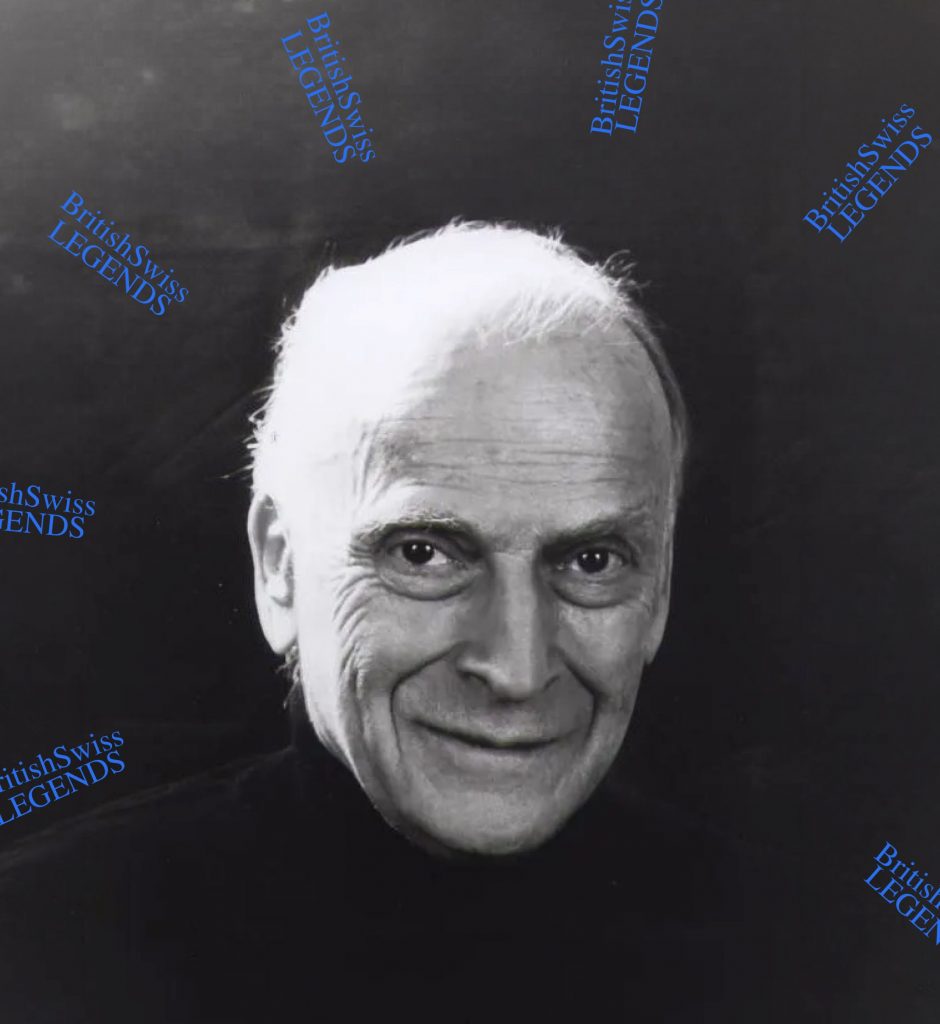
From the cavernous orchestral halls to the smallest classical venues, Yehudi Menuhin is recognised as one of, if not the, best violinist of the 20th century.
A prodigy from a young age, Menuhin’s technical brilliance astonished audiences around the world.
Upon hearing him play, Albert Einstein famously declared that “Now I know that God exists”: a testament to the rare talent that Menuhin possessed. But instead of keeping his talents confined to the concerts that he played, the eventual Lord Menuhin was prolific in cementing his legacy through education, charity work, peacekeeping and philanthropy, not just in the UK and Switzerland, but across the world.
Emotions through music
Born in New York to Russian-Jewish parents, his early life was defined by questions of belonging. His name, Yehudi, meaning “the Jew”, was chosen by his mother and was connected with the defiance that defined the Jewish experience throughout the 20th century. Marianne Poncelet, Executive Vice President of the International Yehudi Menuhin Foundation, told us, “His name already carried his destiny: the Jew of Peace.”
It was not long before Menuhin’s potential was shown to the world, dazzling crowds from just 12 years of age. “He communicated his emotions through music in a way that went beyond technique,” Poncelet explained. “He had a fantastic virtuosity and freedom while playing. He had such a fantastic and deep knowledge of all kinds of music.”
Though his talents were exceptional, Menuhin was always a “universal” violinist rather than a classical one, according to Poncelet. This is illustrated by his journey to stardom: after early success in the United States, his time being taught by Romanian composer and violinist Georges Enescu in Paris added even more vibrancy to his work. Romanian folk traditions and Romani musicians introduced freedom, improvisation and emotional intensity to his pieces, and showed a willingness to go beyond genre norms.
Unlike other classical musicians of his time, Menuhin was not afraid to reach across cultural divides, performing everything from traditional folk music to jazz and Indian music with Ravi Shankar or Stéphane Grappelli. “His music was always in the service of meeting other cultures,” Poncelet noted.
A defender and advocate for peace
His actions were not confined to the world of music either. Growing up in an age of rising anti-semitism and Nazisim in Europe, Menuhin used his position to take a stand against tyranny and injustice in all its forms. “He defended artists who could not defend themselves…He dared to take strong positions when others remained silent…He was a free ambassador of peace — unattached, and therefore trusted.”
During and after the Second World War, he performed for Allied forces across the world and in the liberated concentration camps in Europe. Poncelet explained that he thought music would restore dignity and hope where it had been systematically destroyed.
Throughout his decades-long career wowing audiences worldwide, Menuhin would stick to his mission of standing up for persecuted voices. He frequently spoke out for persecuted artists living in authoritarian regimes, from the Soviet Union to the dictatorships of South America.
Later in his life, Menuhin would continually advocate for peace. Poncelet noted that, for example, in the 1990s, he would constantly contact NATO Secretary General Javier Solana, urging responsibility and restraint during the Balkan Wars.
Menuhin, the UK and Switzerland
Throughout his long and storied career influencing the world, Menuhin’s main places to call home remained cemented in two locations: Switzerland and the United Kingdom.
Though he was American-born, Menuhin’s life was deeply rooted in the United Kingdom, settling there early in his life, alongside his wife Lady Menuhin. He gained British citizenship in 1985, and in 1993, he was ennobled by Queen Elizabeth II.
In Switzerland, Menuhin found himself a home in Gstaad from 1957 onwards. The country offered him “harmony, warmth and humanity,” Poncelet noted, adding that the mountains gave him a renewed creativity “inspiration” and ultimately “quietness” in which to reflect. Over his life, he was awarded honorary citizenship of a number of Swiss towns and cities.
A legacy unbound in music and education
Though Yehudi Menuhin, now Lord Menuhin, passed away in 1999 at the age of 82, his legacy and work live on. Founded by Menuhin in Brussels, the International Yehudi Menuhin Foundation fosters social inclusion of children from all cultures through the practice of the arts at school.
Every year, the foundation runs projects in 13 countries, improving the lives of 60,000 children. “Through the arts,” Poncelet says, “you can change the reality of a school…When children create together, social barriers begin to dissolve.”
Elsewhere, the Yehudi Menuhin School in Surrey, founded by the artist in 1963, gives gifted young string players a solid musical education. He also promoted the Bath festival and later on launched Live Music Now, an initiative that brings musical concerts to hospitals, care homes, prisons, and schools and refugee centres.
In Switzerland, Gstaad has Menuhin to thank for the annual Gstaad Menuhin Festival and the International Menuhin Music Academy. “His spirit lives on where children are learning music,” Poncelet concluded.
A cultural listener and compassionate advocate
When asked what defined Yehudi Menuhin above all else, Poncelet pointed to one word: compassion.
Poncelet concluded that what set Menuhin apart and made him the visionary humanist we know was also his belief in how music can be a force for peace. “Only if you believe deeply in your cause can you transform the world.”