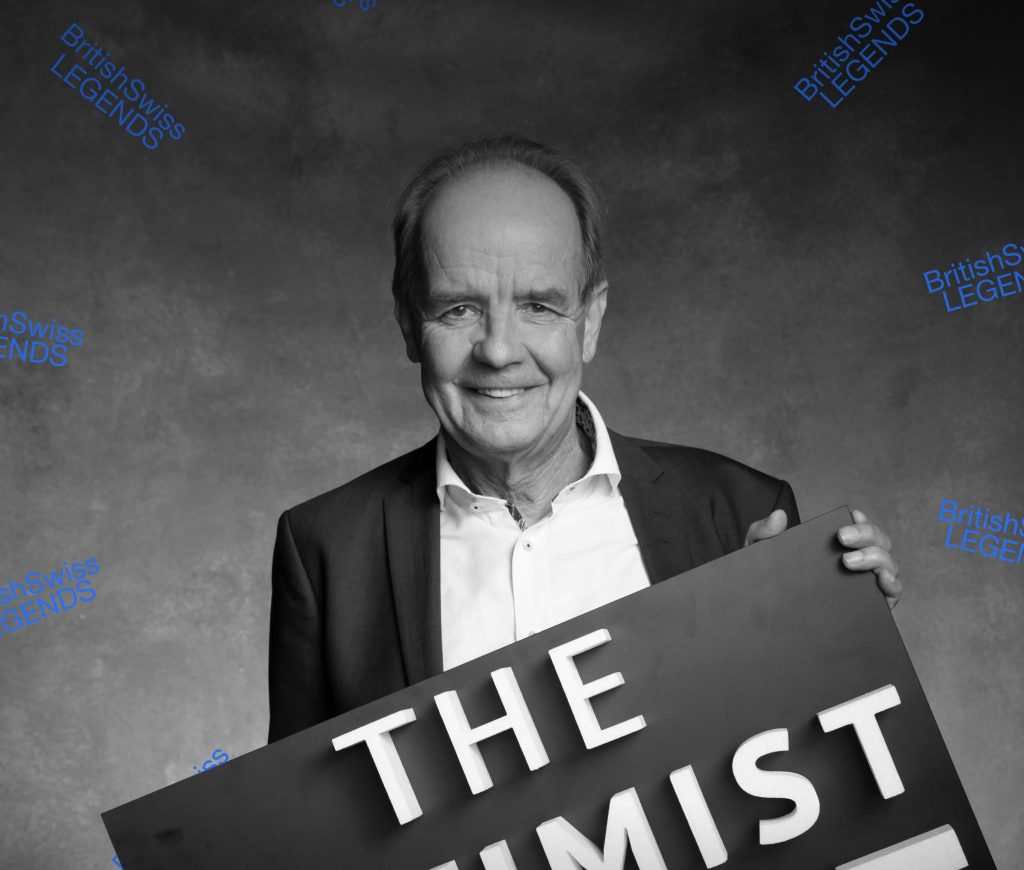
Though concert-goers in Switzerland today have a myriad of chances to see the world’s greatest pop stars, it hasn’t always been easy to attract big names to the Alpine nation. Thanks to André Béchir, the legendary concert and music promoter, the country is now a regular stop on the global touring circuit.
For more than five decades, Béchir has been a force pushing the Swiss concert scene forward, and in many ways is the man mostly responsible for creating the concert landscape we see today. He did not inherit an established market; he is the architect who made one.
Priest’s guarantee: André Béchir’s first concert
Béchir’s journey would begin in 1968. Though he originally trained as an engineer, he was fascinated and engrossed in the emerging world of rock and roll and the musical acts that came with it. In that time of rebellion, Béchir, who was not even old enough to sign contracts, decided to put on a concert.
However, when posters for the debut show arrived unannounced and unexplained at his parents’ doorstep, his parents were shocked and appalled. “My parents saw it, and they said, you have to cancel” Béchir told us. To get around it, he summoned the local priest in the town, “he said, don’t worry, in case they’re going to lose money, I will cover them.”
In the end, the concert was a success, and Béchir was able to find a way into the world that he loved. “I’m not a musician. I’m a promoter. It was fascinating to promote the show from A to Z… marketing, security… how to get people,” he noted.
Good News and rock superstars
In 1972, André Béchir took over Good News Productions, the vehicle which would propel him to the very height of the Swiss musical scene. Their first big break came soonafter: despite initially hoping to secure Led Zeppelin to perform in Switzerland, they managed to get Deep Purple.
Up until this point, Switzerland was largely ignored as a host of international acts, with bands choosing to play the larger arenas of Germany, France and Italy. Deep Purple and Béchir proved that the country could, in fact, host major international performances and host them well. Béchir managed to secure Pink Floyd soon after, and in 1973, together with fellow visionary Claude Nobs, he got the Rolling Stones to perform in Bern – he would go on to promote the Stones 11 times.
His client list soon read like a catwalk of all the greatest rock acts of the era. Paul McCartney (with Wings), The Who, Black Sabbath, AC/DC, Bruce Springsteen, Bob Dylan, ZZ Top, Santana, Stevie Wonder and many more are in his contact book. “I had the luck that they have been loyal to me,” Béchir mused.
Luck, perhaps, but also the result of a deep trust. “What I needed was the confidence of the agents in England… they said I’m a good promoter.” In the first case, “it was mainly English acts” that Béchir was able to secure, creating a deep but unofficial role as a liaison between the United Kingdom and Switzerland.
Rock and Roll in Switzerland
Throughout his career, Béchir also had to bridge the demands of the fans, the reluctance of the establishment and the needs of the bands. “Rock music never had the standard like in England or in America,” he says. “In England… politicians like to be part of it. In Switzerland… It’s very hard for politicians to stand behind it,” he explained.
Concerts in the 1970s were volatile, with security teams – often consisting of Hell’s Angels – having to fight off audiences that demanded to see the concert either for nothing or for pennies. “I support low ticket prices”, he argued, though he conceded that the business is “money-driven.” “I really needed a lot of effort and a lot of energy to stay and say, let’s do it further.”
Despite the reluctance of the establishment, the benefit of Béchir’s work helps not just music venues, but also restaurants and hospitality, too. He explained that when a Rolling Stones show was cancelled in Bern, the hotel industry said they lost millions of francs in revenue.
“They start slowly to realise what the impact is when a big show is coming… the people spend a lot of money.” He later founded the Moon & Stars Festival in Locarno, demonstrating that contemporary music could rival established cultural events in economic benefit.
Sex, drugs and rock and roll to private jets and stock markets
Reflecting on the industry he created, Béchir said he has witnessed the rebellion of the 60s and 70s become the revenue of the 2000s. “In the early days, we had to design the posters… unloading the trucks together with musicians. Today — a hundred trucks, accountants, lawyers.” “It’s about how music has changed from the 60s to today… from sex, drugs and rock and roll… to private jets and stock markets.”

For Switzerland, he fears that the Swiss concert scene must expand in both size and quality in order to continuously attract the biggest acts, using the UK as a prime example. Wembley Stadium and The O2 Arena, he argued, represent visionary venue design — integrating gastronomy, comfort, and scale. “You can play 10 shows at Wembley, 70,000 people in each… Why should you play Switzerland with 48,000?”
Though he recognises that he is a big name in Switzerland, and admits that he was a trailblazer, Béchir prefers to stay out of the spotlight. “I don’t need to be remembered; my memories are with me.” “I have been lucky… I had the strength, I had a vision, and I’ve been lucky.”
However, Béchir will always love the impact he has had on people. “For me, it’s still something unique… when you have 10,000 people who have an evening which they will never forget.” In this way, he will likely be remembered for the hundreds of unforgettable nights that would not have happened without him.