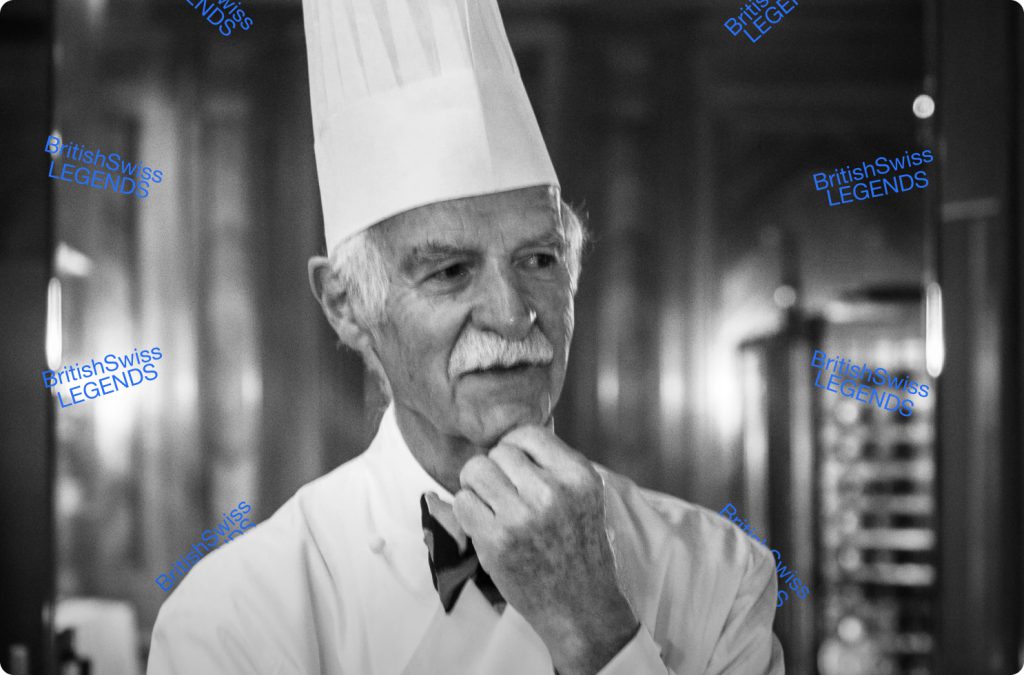
When people talk about the white heat of the kitchen and the global world of gourmet food, one name inevitably rises to the surface: Anton Mosimann.
Over a career spanning more than five decades, the Swiss culinary master has worked across continents — from the haute cuisine of Europe to the restaurants of Asia — earning a reputation for radically simple yet perfectly crafted dishes, razor-sharp precision and deep respect for ingredients.
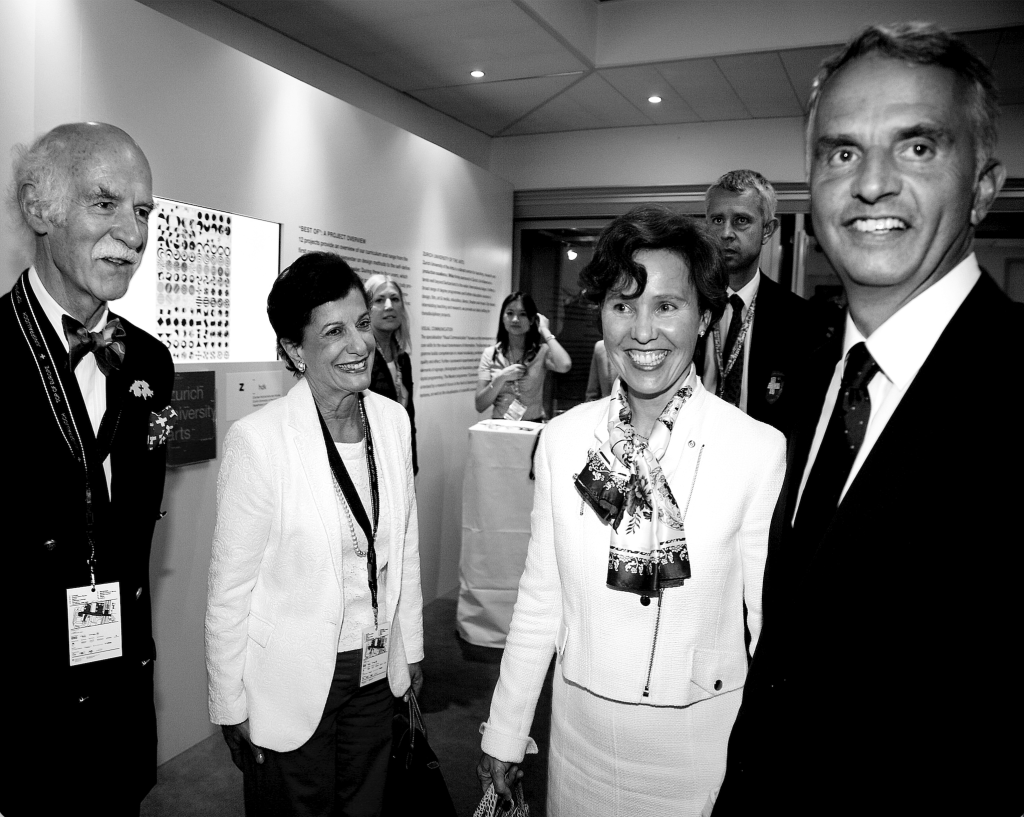
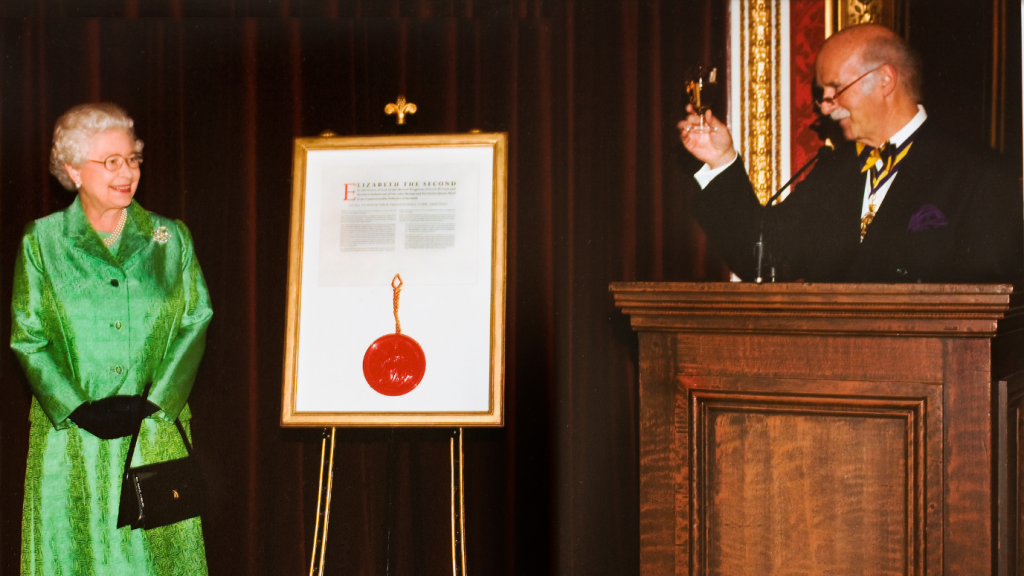
Mosimann has cooked for four generations of British royals, prime ministers and the international jet set. Through drive and passion, he has shaped what we expect from the finest dining experiences, and in a world where many of the most famous chefs are known for their “fire and fury” approach to cooking, Mosimann has remained the “gentleman of the kitchen.”
Yet despite a career that has reached the very top of the culinary world, his story begins far from palaces and Michelin stars, in the modest surroundings of his parents’ restaurant in the German-speaking part of Switzerland.
Born in the Kitchen
Born in 1947 in Solothurn, he grew up largely in his parents’ restaurant, where he quickly discovered his love for cooking. “At four years old, I already knew: I didn’t want to be a pilot or a train driver — I wanted to be a chef,” he recalled.
Those early years in the restaurant were where Mosimann first showcased his natural talent, becoming acutely sensitive to flavour, smell and taste. “I learned very early how to smell food — how to smell cheese and vegetables,” he said. “That stayed with me for life.” Regular visits to Biel’s local market sparked a lifelong devotion to fresh ingredients.
His formative years were also defined by the discipline and long hours inherent in the hospitality industry. That sense of drive also extended beyond the kitchen. “I was a junior Swiss wrestler — that competitive spirit is still in my blood,” he noted, a trait that would later propel him to the top of his profession.
Getting hooked on fine dining
At 17 years old, Mosimann was the only student in a final of 4 to pass his cooking exam. However, though the natural progression would see him work at smaller restaurants in the Alps, he made a bold call, applied and was accepted for a position at the Villar Palace Hotel in Villars-sur-Ollon.
Choosing this five-star hotel in Villars was “the best decision I ever made,” he said. Seeing how a luxury hotel kitchen operated changed everything. “Once you’ve experienced that, you don’t want to go back.”
By the age of 25, Mosimann had earned his Chef de Cuisine diploma — the youngest person ever to do so — and spent the following years cooking around the world, from Rome to Japan. After winning his first gold medal for cooking and receiving a recommendation from a fellow Swiss chef, he was offered the opportunity that would, as he put it, “change my life”: the role of head chef at the Dorchester Hotel in London.
The Dorchester: A reputation forged
At just 28 years old, Mosimann arrived at the Dorchester to find a kitchen that led to chaos instead of creation. “Oh my God — 132 chefs in the kitchen were shouting and screaming. It was unbelievable,” he recalled. “I could not work like this.”
Amid the noise and pressure, he had also noticed something more troubling: the food itself had become secondary. “Everything was overcooked. The vegetables — instead of green, they were grey. I said, I really must do something.”
Changing a deeply ingrained culture was no easy task, particularly for a young chef leading staff who had been there for decades. “I said, ‘Ladies and gentlemen, as of tomorrow, no more shouting.’ They told me, ‘Oh no, it’s part of the job.’ I said, ‘It isn’t anymore.’”
Gradually, Mosimann reshaped the kitchen — not just technically, but culturally. Though his methods were rooted in discipline, they were guided by respect. “I always treated people in a gentle way,” he said. “Every morning, I shook hands with every single member of staff. Respect is one of the most wonderful things — respect each other, respect your profession.”
Cuisine Naturelle
Mosimann became known for his light, simple and elegant food, later named Cuisine Naturelle. The technique involved bringing the best flavours out of every ingredient, without using excessive oil, butter, cream or alcohol, a technique unheard of in fine dining at the time. The idea is that “good food” and “food that is good for you” can mean the same thing.
His food was embraced not only by the British Royal Family but by global royals and seven UK prime ministers. “The history of food in Britain divides neatly into two periods – before Mosimann and after Mosimann,” wrote fellow chef Loyd Grossman.
Yet for all his prestige, Mosimann remained flexible and guest-focused. “I never ever refused a request from a customer,” he said. “If they wanted no salad, or no this or no that, I always accepted it. They are the guest and they pay the bill.”
For Mosimann, cooking was never a burden. “Cooking is one of the most wonderful professions in the world because you give pleasure to people every day,” he said. “I never had a bad day in my life. I never woke up not wanting to go to work.” His approach paid off when the Dorchester became the first hotel restaurant outside France to earn two Michelin stars.
Giving up your stars
After years of success, however, Mosimann began to ask himself a simple question: what’s next? In 1988, despite offers from restaurants across the world, he and his wife chose to remain in London, a city they had grown to love. He made the extraordinary decision to give back his 2 Michelin stars and open a private dining club in the heart of Belgravia.
“I was the first chef ever to give two Michelin stars back,” Mosimann said. Free from what he described as political pressure, he was able to focus entirely on guest experience.
Though success did not come overnight, a combination of impeccable cooking, service, local expertise and loyal clientele eventually made Mosimann’s one of the most sought-after dining destinations in the city. He also spread his cooking to the masses through several popular cookbooks.
Inspiration, motivation and respect
Looking back on his career, Mosimann reflected on what lay behind the medals, diplomas and photographs. “They realise that nothing comes by chance,” he said. “Inspiration, motivation and respect — these are the three most important things. Take the time to talk to people. Take the time to guide them. It’s a good investment.”
His advice for the next generation of culinary talent is characteristically simple. “Say yes when you can. Being a yes person opens many doors,” he said. “If Mosimann can do it, I can do it — that’s what I want young people to think. Go for your best and choose the top. If you choose the best, hopefully you never look back.”