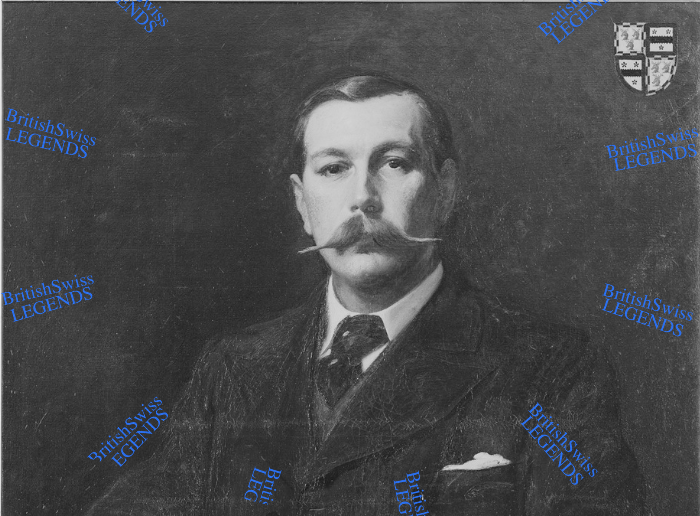
“For a person who suffers from too much dignity, a course in Norwegian snowshoes would have a fine moral effect.”
Arthur Conan Doyle
For most people around the world, the name Conan Doyle evokes scenes of dimly lit alleyways, perplexing conundrums and the worst crimes of Victorian and Edwardian England. The author of the iconic Sherlock Holmes series has become one of the best-known writers of his age, bringing captivating mysteries to life for the masses.
However, a lesser-known part of the man’s remarkable life came in the Alps. Little did he know when he first arrived in Switzerland that his most famous character would plunge to his supposed death in its mountains, and that he would introduce Britons and the wider world to what is often mistaken for the country’s national sport.
A doctor turned literary icon
Arthur Ignatius Conan Doyle was born in 1859 in Edinburgh, Scotland. After stints at school in both England and Austria, in the late 1870s, Conan Doyle’s career looked destined for the operating table rather than the ink and pen, having trained to become a doctor.
However, as he began specialising, Conan Doyle always devoted time to his great passion for writing. He wrote everything, from rousing science fiction and humorous comedies to romances, poetry and historical novels. However, none of his works received much acclaim, that was until 1887.
In that year, Conan Doyle’s first Sherlock Holmes story, A Study in Scarlet, was published. The character, a brilliant genius detective ably assisted by Dr Watson, was Doyle’s most successful character and series. The public loved the clever plotlines, witty dialogue and enthralling mysteries presented by Holmes, making him one of the world’s best-known characters.
Part of the reason Holmes endured was Doyle’s ability to create believable people and settings. As Vincent Delay, Head of Administrative Policing of Canton Vaud and Curator of the Sherlock Holmes Museum in Lucens, told us, the books often read “like a biography of somebody.”
It also remains accessible: “For a foreigner reading, it’s very good English — very plain English, very actually classic.”
However, Conan Doyle himself was not a huge fan of the character, writing to his mother just five years later that he was thinking of killing Holmes off. He later explained that he lamented the amount of time writing new Holmes books was taking up, and wanted to move on to new projects.
But to kill off his most famous and popular character, Conan Doyle needed a fitting, grand and memorable ending to the Holmes story. Thanks to his trip to Switzerland, he was given just such an opportunity.
A dreadful cauldron of swirling water: Holmes at Reichenbach
Conan Doyle and his family first toured Switzerland in 1893, visiting all of the most iconic spots from Lucerne to the Alps. As they were visiting Meiringen, Canton Bern, he first learned of the imposing Reichenbach Falls.
A keen hiker, Conan Doyle ascended to the top of the 250 metre tall falls. Captivated by the majesty of the location, from the rush of the water to the stunning mountains beyond, he began hatching a plan in his diary to cast both Holmes and his nemesis, Professor Moriarty into the icy depths. Thus, The Final Problem was born.
The story sees Holmes and Watson travel to Switzerland, chasing Moriarty after his gang is arrested in England. Having deliberately sent Watson on a false trail, Holmes and the Professor then engage in a savage fight, which sees them both plummet into the water below.
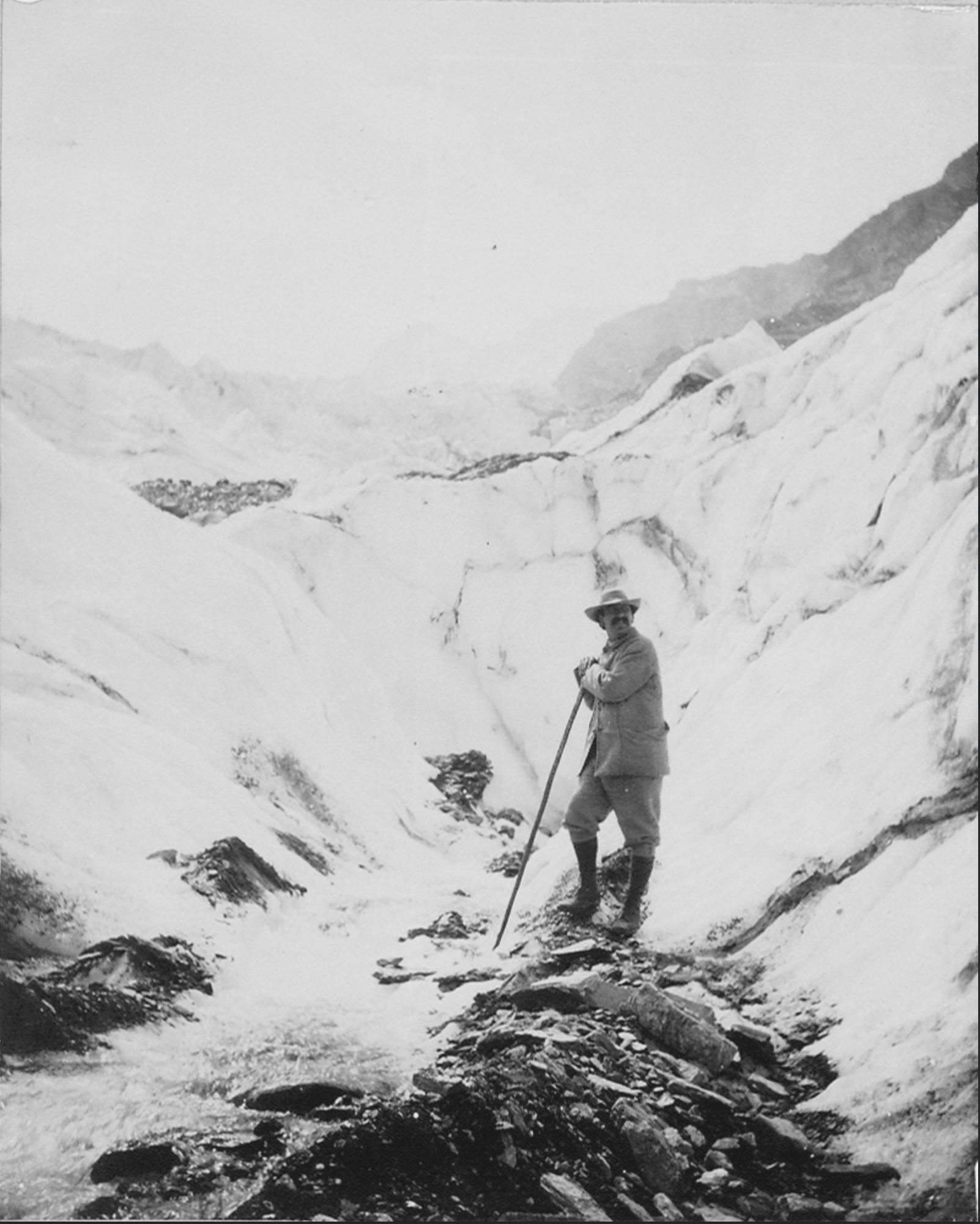
Visitors today can ascend the nearby funicular and walk to the very site where the two literary heavyweights met their end. Amid Switzerland’s beautiful scenery, Conan Doyle was able to put his greatest character to rest.
However, though he wanted Holmes confined to a watery alpine grave, his readers didn’t. After public pressure, he relented, reviving Holmes in The Hound of the Baskervilles in 1901, and later explaining in The Adventure of the Empty House in 1903 that only Moriarty had met his end at Reichenbach, and that Holmes’ death was simply a cover.
In the end, 56 short stories featuring Sherlock Holmes were published, and Reichenbach would become a literary shrine for detective fans the world over. Yet, Conan Doyle’s connection with Switzerland did not end with Holmes’s demise at Reichenbach Falls.
Conan Doyle and skiing
When you think of Switzerland today, skiing appears to be the country’s most popular or even national sport. In fact, the practice was practically unheard of in the country until the late Victorian period, and the country’s actual national sports are Schwingen, Hornussen and Steinstossen.
The events which led Conan Doyle to discover skiing were not happy. With his wife, Louisa, suffering from tuberculosis, in 1894 the family travelled to Davos to take advantage of the crisp mountain air and the luxury afforded by Switzerland’s famous alpine infirmaries.
It was here that the author discovered the pastime of skiing. Tobias and Johannes Branger, two locals from Davos who pioneered skiing in the area, taught Conan Doyle how to ski cross-country, becoming one of the first outsiders to master the practice. In 1894, Conan Doyle and the Brangers made an epic skiing journey from Davos to the town of Arosa.
His experiences were documented in An Alpine Pass on “Ski”. He wrote:
“You put them on… and the next moment you are boring your head madly into a snow bank… and your friends are getting more entertainment than they had ever thought you capable of giving.” “The ski are the most capricious things upon the earth. One day you cannot go wrong with them; on another… you cannot go right.”
Conan Doyle was sure to publish his account in the Strand Magazine, the same magazine where he published his Sherlock Holmes stories. This guaranteed readership, and was the first time that the British public, and later the world, were exposed to the idea of skiing.
Though skiing itself has been around for millennia, especially in Scandinavia, the idea of using skis for fun and sport was completely new. The concept of Nordic skiing was dominant, and skiing itself was very rare in the Alps when Conan Doyle arrived – the first ski club in Switzerland emerged just a few years earlier.
Thanks to his description, Conan Doyle launched the idea of skiing to the British general public and popularised the pastime in Switzerland – though a later claim that he had introduced skiing to the Alpine nation is not founded on fact.
Nevertheless, in a time when foreign travel was a luxury, his vivid account helped make the Alps feel accessible to the British middle class, making it a bucket list destination for the general public. “The Strand Magazine was very widely read and people discovered that you could do something in Switzerland in winter,” Delay explained.
The resorts of Davos and Arosa have the famous novelist to thank for their popularity, and Switzerland would not have emerged as Europe’s skiing capital were it not for Conan Doyle.
Conan Doyle’s Swiss legacy
Sir Arthur Conan Doyle is one of the late Victorian and Edwardian period’s greatest writers, famous for his excellent writing style and captivating storylines. His time in Switzerland was instrumental in forming the final moments of his most iconic character.
At the same time, Conan Doyle was also able to introduce Switzerland and the United Kingdom to the pastime of skiing, becoming the catalyst for the winter sports industry we know and love today. The British love of skiing would not have happened without him. Though his work led to the death of Holmes in the heart of the Bernese Oberland, his efforts also led to the birth of the winter sports industry.