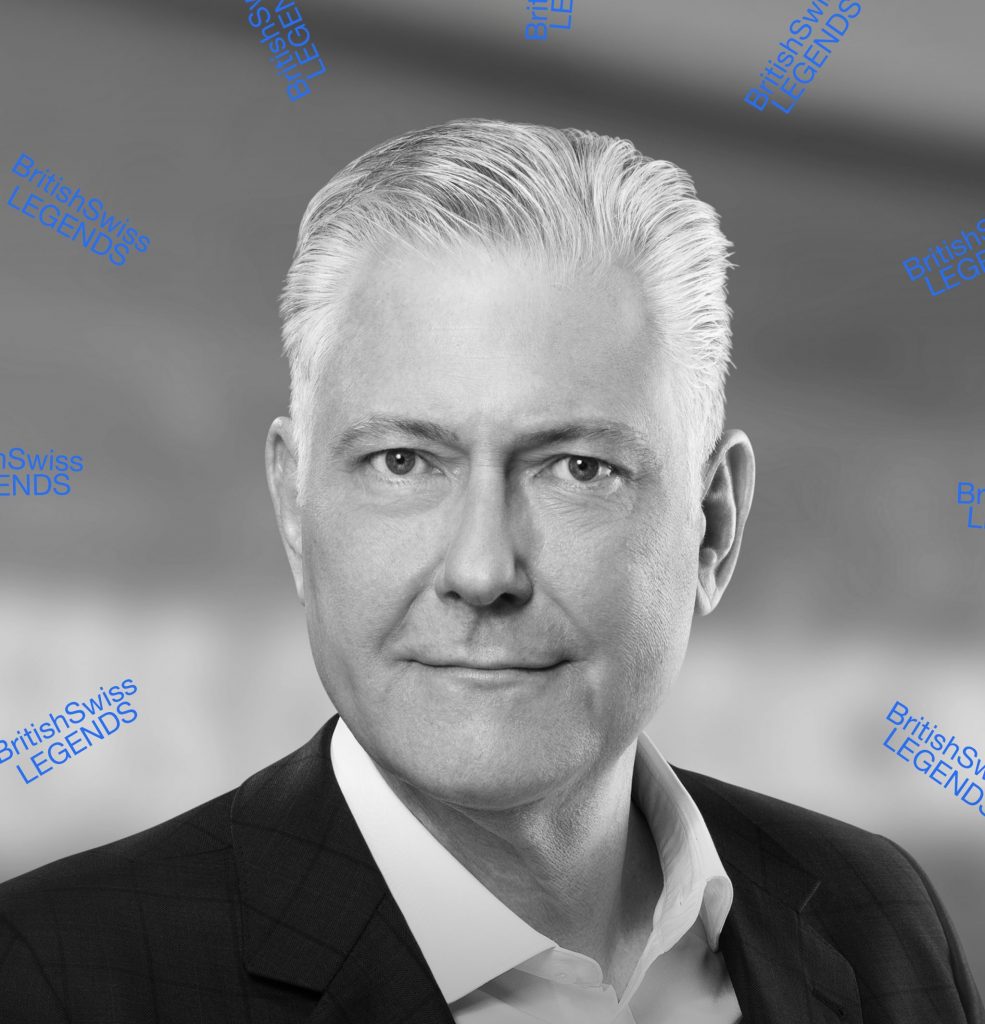
Some of the key aspects of a successful career are curiosity, courage, and good intent. Few figures embody these principles more than Dr Lutz Hegemann, the President of Global Health and Swiss Country Affairs at Novartis.
Through a career shaped by global health and medicine, Hegemann has transitioned from a conventional clinical career to one defined by the pursuit of greater health for all, regardless of location or income.
In his role, Hegemann uses expertise from Switzerland, the UK, and beyond to combat some of the world’s most pressing diseases. But to see where this impressive career first flowered, you must leave the bustling city of Basel, the Germany of his childhood and the UK, and instead head to India.
Finding purpose in the hospitals of India
Born and raised in Germany, Hegemann trained as a doctor before moving to the Netherlands, where he earned a PhD in molecular pharmacology. In his early years, his path suggested that a life as a successful clinician beckoned, and initially at least, that seemed to be the case.
That was until a bout of curiosity drove him to travel to India to work with patients affected by leprosy. In 1991, India contained 75 percent of the world’s leprosy cases, and even today, around 100,000 new cases are reported in the country every year. Speaking to us, Hegemann reflected that friends “couldn’t quite understand why I was voluntarily going to India.”
The experience shaped the compass with which Hegemann oriented his career, as he was able to understand “the struggles that people and communities have who are living under very different circumstances.” It also showed him “the power that medical innovation can have in changing people’s lives” – for instance, treatments developed by the global community “have been able to reduce the burden of leprosy by 95 percent.”
Coming from a “fairly wealthy country”, Hegemann saw firsthand the disparity between medical possibilities and the lived reality of medical practitioners and the communities they served in India. Most importantly, he saw that medical innovation could transform communities if deployed in the right way.
Turning on-the-ground experience into global impact
Though he initially intended to remain in clinical practice, Hegemann began to question whether he could make an even broader impact elsewhere.
Following years in practice and academia, fulfilling teaching roles across the world, he went into pharmaceutical development, learning the intricacies of conducting clinical trials and regulatory science. It was not a planned transition, rather an openness to possibility: “a lot of things happened by serendipity.”
His career reached a new height two decades ago when Hegemann took up a leadership role in clinical research at Novartis, and 15 years ago, he was chosen to head a new unit focused on global health.
Global Health in the 21st century
What he first encountered in the role was stark. Though there were donation programmes, partnerships and lots of goodwill, the pipeline for new medicines “was virtually empty.” The enthusiasm for developing new treatments to combat neglected diseases was not reflected in the lab.
It was here that Hegemann combined his experience treating patients in India with his industry track record. It would not be an easy task: Hegemann noted that drug development, typically “takes more than 10 years from start to finish.” There would be scientific challenges, regulatory hurdles and geopolitical tension, but he added that “when you don’t have setbacks, then you’re not pushing hard enough.”
Thanks to Hegemann’s leadership, the pipeline of new medicines began to grow and expand. More than 10 new medicines for neglected global diseases entered development, with Hegemann employing a mixture of expertise from Switzerland, the United Kingdom and beyond.
Hegemann highlighted a new malaria drug specially formulated for newborns and babies that was approved and introduced in several African countries last year, with more regulatory approvals expected to follow throughout 2026. Up until that point, parents and caregivers had to make do in treating the tiniest patients by crushing tablets intended for adults, increasing the risk of a misdose.
Today, his team are advancing the sector’s largest pipeline for neglected diseases and malaria, including the next generation of antimalarials that have the potential to combat emerging drug resistance. During the COVID Pandemic, Hegemann led Novartis’ response to the crisis.
In all, he argued that “the impact of our work as a team comes first and as an individual comes second.”
“It’s not important that people remember me, but that people remember what work was being done.”
Global health and individual impact
For him, the most meaningful moments in his career remain his visits on the ground – such as meeting children who have survived malaria, communities benefiting from new treatments, and health workers empowered with better tools.
Looking ahead, Hegemann notes that the fight for global health is in flux, adding that established models dependent on single large donors, originally the core to funding innovation, are increasingly “fragile.” As the world withdraws from large-scale international development spending, he argued that “We need to shift from programs that are globally-led and locally-implemented to sustainable solutions that are locally-led and globally-enabled.”
How the UK and Switzerland shape global health
In pharmaceuticals, he said that innovation must not end in the lab: “We need to be as creative in bringing medicines to patients as we are in discovering them.” In this regard, he praised both the UK and Switzerland for their respect for intellectual property, belief in the rule of law, and a certain quiet competence that fuels new ideas. “For example, at Novartis, we are employing novel community health initiatives that connect overlooked communities to better health and track down hidden pockets of chronic disease in low- and middle-income countries.”
Hegemann added that both nations are known for having delivered sustained impact on global health. However, he also conceded that both nations need “to be more strategic… more intentional about how they leverage their strengths” given a rapidly evolving geopolitical and global health landscape.
As for him, Hegemann sees himself continuing his work for many years to come. “I feel in a good place,” he concluded, “and I’d love to continue making the impact that I am having.”